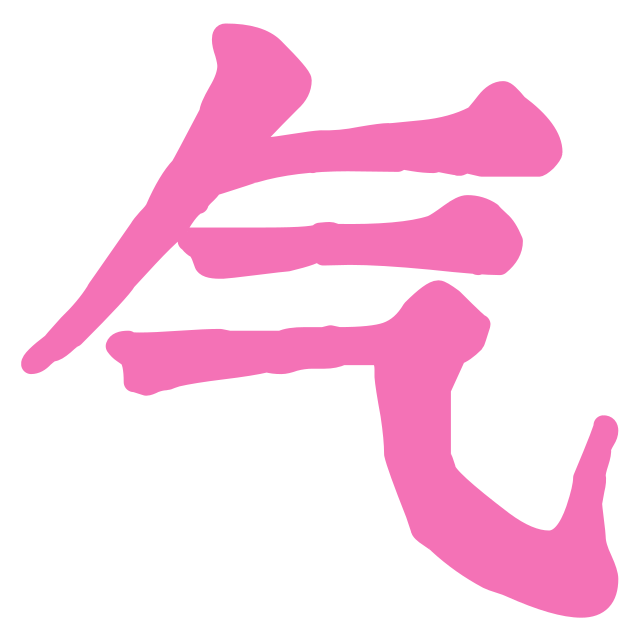
GitQi isn't a startup, a platform, or a funded bet. It's a small tool built for one person, validated in real time, and released because it deserved to exist for everyone else who might need it.
GitQi was built for an osteopath and educational consultant who wanted to leave Wix. She didn't want a CMS. She didn't want a developer on retainer. She wanted to own her website the same way she owns her clinic notes — completely, permanently, and without asking anyone's permission.
So it was built specifically for her, while she used it. Each feature was shaped across a kitchen table, iterated in the minutes after she hit a snag, and validated by whether she'd reach for it unprompted the next day. That process — one real user, in real life, with real opinions — is the reason GitQi feels the way it does.
She has been almost entirely self-sufficient since day one. She updates her site whenever she wants. She doesn't ask for help. She doesn't pay a subscription. The only real barrier, looking back, was the initial setup — which is exactly what the Get Key guide is designed to solve.
GitQi is released as free, MIT-licensed open source because the whole premise of the tool is that you own the page. It would be hypocritical to charge rent on the thing that lets you stop paying rent.
GitQi is a small pun with a real meaning. It rewards saying aloud. It also has two pronunciations, and we're not going to pick one for you.
The publishing backbone of the tool — literally true. And for non-technical readers, it reads as get.
Life force, flow, ownership. The philosophy that your site, your content, and your credentials belong to you.
You're getting the key to your own website. No landlord, no platform, no lock-in, no loading screen standing between you and your page.
Equally valid. Maps to empowerment and self-mastery — the Qi reading. Whichever you prefer is correct.
GitQi is not positioned as "easier Wix". It's positioned as leaving Wix behind — permanently, cleanly, and without missing anything that mattered. These are the principles it's built on.
There is no backing store, no CMS schema, no headless API. The file you see in the browser is the file on disk is the file on GitHub. That's the whole data model — and it means you can read it, grep it, diff it, or walk away with it at any time.
Your credentials live in one file on your machine and never leave it. GitQi has no servers to compromise, no account system to leak, no "forgot your password" flow because there is no password. Local is not a fallback. It is the default.
The code is yours to read, fork, audit, and run. No closed core. No paid tier. No "we'll open-source it if we fail". The whole premise of the tool is ownership — charging rent on it would undo the point.
You should be able to open your site, understand it, change it, and publish it without needing a specialist's help. GitQi is built to make that feel obvious instead of heroic.
GitQi serves two audiences who are really a progression. Most people start on the Get Key path. Some arrive at Git Qi later — or not all. That's fine. Both are welcome.
Clinic owners, consultants, studio owners, practitioners. People currently paying a platform, or paying someone to update their site, who want to own the content themselves.
Small developers, technical freelancers, indie makers who want to read the source, contribute, or self-host gitqi.js. Get involved and celebrate the OSS ethos.